

Author Satej Chakma
Background: The contemporary situation in the Chittagong Hill Tracts (CHT) – a region comprising approximately one-tenth of Bangladesh’s landmass in the southeastern part of the country has become increasingly precarious and volatile compared to any period in the past (Ahmed & Roy, 2024). The human rights situation of the 14 Indigenous communities who have inhabited this region for generations are now in severe jeopardy (Samiti, 2025).
Following Bangladesh’s independence in 1971, Manabendra Narayan Larma, the undisputed leader of the Indigenous peoples of CHT, demanded constitutional recognition of Indigenous identity, distinct culture, literature, arts, and rights, envisioning their flourishment within the framework of the newly independent state (Chakma M. K., Manabendra Narayan Larmar Jibon O Songram, 2016). However, his powerful assertion in the Constituent Assembly in 1972– “Neither my father, grandfather, nor anyone of my forefathers ever identified themselves as Bengali” was disregarded (Chakma M. K., Manabendra narayan Larmar Jibon O Songram , 2016) . Instead, the newly adopted Constitution (1972) denied the ethnic and cultural identity of Indigenous peoples by imposing a monolithic Bengali national identity and over the past 54 years, state-led projects have been systematically marginalizing Indigenous peoples.
Consequently, Indigenous peoples have been subjected by successive ruling regimes to either “Bangalization“ – assimilation into the dominant Bengali identity or “Unpeopling” – systematic erasure from the national consciousness through state policies, decision-making processes, mainstream political narratives, literary discourses, and socio-economic structures (Barkat, 2016).
Conflict to Agreement:
The process of marginalization began as early as January 15, 1972, when Manabendra Narayan Larma and other Jumma leaders submitted a memorandum with four principal demands to the then-President Sheikh Mujibur Rahman (Chakma K. , 2020). Rather than addressing these legitimate political demands, Rahman responded with a threat—suggesting the settlement of Bengali populations from outside the region into the CHT as a means of subjugating the Jumma Indigenous people (Chakma M. K., Manabendra Narayan Larmar Jibon O Songram, 2016). This reflects an overtly hegemonic mindset that altered the course of national politics and contradicted the core principles of the 1971 Liberation War and the 1972 Constitution, one of which was secularism.
While this hegemonic policy orientation began under Sheikh Mujibur Rahman, it was fully operationalized by General Ziaur Rahman. In an effort to suppress the legitimate political movement led by the Parbatya Chattagram Jana Samhati Samiti (PCJSS), a political organization representing the Indigenous peoples’ aspirations, the state militarized the region with numerous army camps and garrisons. Military intervention became pervasive, severely disrupting the peaceful and organic way of life of the Indigenous communities (Parvez, 2025).
Basically, the politics of denial, policy of exclusion led to the building of A-Nation-State which created state-Indigenous conflict (Mohsin, 1997). As a result, from the mid-1970s, the government began systematically settling Bengali populations in the region by providing them with food rations and every possible logistical support. This state-orchestrated migration aimed to manufacture ethnic conflict, alter the region’s demographic and geographic composition, and undermined the Indigenous peoples’ traditional rights to land, territory, and natural resources (Ahmed M. , 2022).
Consequently, the Indigenous Peoples in CHT witnessed more than a dozen massacres before the Peace Accord, over 21 communal attacks after the Accord, and numerous incidents of torture and killing of Indigenous peoples by military personnel and military-backed settlers Bengalis. A large number of people experienced human rights violations as of now. Between 1976 and 1997, more than 54,000 IPs were displaced—many became internally displaced persons (IDPs), while others sought refuge in India’s Tripura state (Massacres in the CHT, 2025).
Despite the decades-long armed conflict, PCJSS remained open to dialogue with the government. There were six rounds of negotiations with General Ershad’s military government, thirteen with the Bangladesh Nationalist Party (BNP) under Khaleda Zia, and seven with the Awami League under Sheikh Hasina, totaling 26 official dialogues. These cumulative efforts culminated in the signing of the historic CHT Peace Accord in 1997 (Chakma S. K., 2011).
This agreement was, in essence, a corrective measure to the flawed political vision embedded in the 1972 Constitution. Through the Accord, both the Government of Bangladesh and the Indigenous peoples of the CHT reached a consensus on ensuring the political, social, cultural, educational, and economic rights of all citizens in the region and on accelerating the socio-economic development of the CHT.
According to various military and civilian sources, at least 8,140 individuals were reportedly killed, injured, abducted, or went missing in armed conflicts in the CHT during the post-independence period up to the signing of the 1997 Peace Accord. Among those killed, 1,138 were Indigenous inhabitants, 1,446 were Bengali settlers, and 380 were members of different security forces (Dey, 2024).
However, violence did not cease with the signing of the Accord. In the post-Accord period, 1,315 individuals were killed, including 899 Indigenous persons, 390 Bengalis, and 26 personnel from military and paramilitary forces. Around 1,823 people were injured, and approximately 2,198 individuals were abducted. Notably, none of these incidents have resulted in exemplary justice or accountability (Dey, 2024).
Broken Promises and Deception:
The historic 1997 CHT Accord is divided into four sections, comprising a total of 72 provisions: i. General Provisions ii. 3 Hill District Councils iii. Chittagong Hill Tracts Regional Council, iv. Rehabilitation, General Amnesty, and Other Issues.
As part of the Accord, 1,966 members of the Shanti Bahini, the armed wing of the Parbatya Chattagram Jana Samhati Samiti (PCJSS), surrendered their arms and returned to civilian life. Indigenous communities in the region had hoped the Accord would pave the way for representative democracy, ending the long-standing militarization and establishing self-governance through institutions such as the Ministry of CHT Affairs, the CHT Regional Council, and the three Hill District Councils (Chakma S. K., 2011).
The Accord stipulated the devolution of 33 administrative subjects to the Hill District Councils, including: general administration and law enforcement; education, health, agriculture, forestry, livestock, local policing; Industry and commerce, social welfare, culture; maintenance and development of roads, culverts, bridges, ghats, parks, playgrounds, inns and rest houses; local development planning and implementation; religious, moral, and economic advancement of local communities; customary law, land and land management, natural resource governance; environmental protection, tourism, youth welfare; licensing of local trades and crafts, statistical registration, jum (shifting) cultivation, and more.
The CHT Regional Council was entrusted with supervisory, coordinative, and monitoring responsibilities over the three Hill District Councils, particularly regarding: Administrative and developmental coordination; Supervision of local and municipal bodies; Coordination of general administration, law and order, and disaster management; Oversight of NGO activities; customary laws and justice systems; Licensing of heavy industries (CHT Accord , 1997).
Despite some progress in the past 27 years, key provisions such as devolution of general administration, law and order, local police, land and land management, forestry and environment, tourism, and infrastructure development remain unimplemented. The Accord also required the withdrawal of all temporary military camps except for six cantonments. Yet over 400 temporary camps remain in operation, disrupting the everyday lives of Indigenous peoples and amounting to a de facto state of military governance (Report on the Status of CHT Accord Implementation , 2022).
Currently, four parallel systems of governance operate in the CHT: 1. Military rule under direct control of military officers; 2. Civil administration led by Deputy Commissioners, Superintendents of Police, and Upazila Nirbahi Officers; 3. Hill District Councils under the CHT Regional Council; 4. Traditional Indigenous governance structures, led by Circle Chiefs, Headmen, and Karbaris.
However, it is deeply concerning that in 27 years, democratic elections have not been held for the CHT Regional Council or the three Hill District Councils, nor has a coordinated system of local self-governance involving traditional leadership been effectively implemented. A lack of political will from Bangladesh’s national leadership is one of the principal obstacles to the Accord’s full implementation.
Even though the Awami League held power for a continuous 16-year period, they failed to implement the accord fully. Rather the government continued to mislead both domestic and international audiences with claims of progress, while simultaneously engaging in propaganda against Indigenous leaders and promoting proxy groups to divide the PCJSS-led movement (Samiti, 2025).
During the 25th anniversary of the Peace Accord, the government’s official statement claimed as such-“Of the four parts of the Accord, Part A includes four general clauses, Part B consists of 35 clauses on the Hill District Councils, Part C includes 14 clauses on the Regional Council, and Part D includes 19 clauses on rehabilitation, general amnesty, and other matters. A total of 72 clauses. An inter-ministerial committee has been formed to assess the implementation progress. The committee has held several meetings and the process is ongoing. Most of the provisions of the Accord have already been implemented (Islam, 2022).”
Nonetheless, this statement was misleading and deceptive. Instead of ensuring full implementation, the government followed a “divide and rule” strategy, fostering internal divisions to weaken the movement for peace and justice.
According to the PCJSS, only 25 of the 72 provisions have been fully implemented, 18 partially, and 29 remain completely unimplemented.This assessment is not limited to the PCJSS alone. Several academic institutions and researchers working on peace and conflict studies have echoed similar concerns. Notably, the Peace Accord Matrix developed by the Kroc Institute for International Peace Studies at the University of Notre Dame (USA) evaluated the CHT Accord’s first ten years (1997–2007) and rated the implementation score at 49 out of 100.The Matrix identified only minimal progress in areas such as:Elections and political restructuring, Decentralization, General amnesty, Refugee rehabilitation, Rights of internally displaced persons (IDPs), Recognition of Indigenous rights, Transfer of authority to district and regional councils, Peace Accord monitoring, Civil-military separation.It reported complete implementation of disarmament, demobilization, social reintegration, and prisoner release, but noted no significant progress in restructuring local police forces.
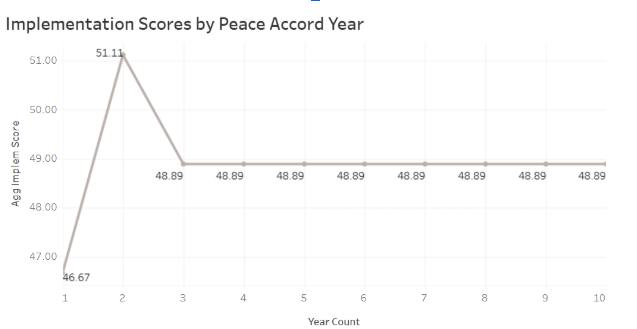
Source: Peace Accord Matrix (1997–2007), Kroc Institute for International Peace Studies, University of Notre Dame
Additionally, after the 2024 student-led popular uprising in Bangladesh, the UN High Commissioner for Human Rights initiated a fact-finding mission. As part of their report, in a section titledabuse in the CHTsays–“In the Chittagong Hill Tracts (CHT), land conflicts and policies promoting the relocation of Bengalis from lowland areas to the CHT, often with the backing of the military, have marginalized local communities, sparking long-standing struggles. These communities are considered indigenous peoples by United Nations human rights mechanisms. The Government of Bangladesh rejects the term indigenous and recognises these communities as ethnic minorities under the Constitution. A Peace Accord reached in 1997 was never fully implemented, and military presence and internal conflicts persist (OHCHR, 2025).”
Restorative Justice and Peace in the CHT
The Chittagong Hill Tracts (CHT) Accord and the notion of peace in the region have become nearly synonymous. However, for the Indigenous peoples of the CHT, peace remains elusive. Despite deeply rooted conflicts, efforts toward healing and reconciliation have been minimal. Alarmingly, current developments indicate a gradual return to the pre-Accord era. Although the mass uprising of 2024 revived Indigenous–state relations, it failed to address the fundamental issues of Indigenous peoples in the CHT. On the contrary, violent attacks against Indigenous communities have continued even in the post-uprising period (Samiti, 2025).
Under the recent power holding interim government, the human rights situation in the CHT has shown no signs of improvement. In fact, over the past year, Indigenous communities have experienced increasing insecurity and systemic rights violations. Notably, between 18–20 September 2024 just weeks after the Yunus-led Interim Government took office, coordinated attacks by Bengali settlers in Khagrachari and Rangamati districts led to the killing of four Jumma individuals, widespread looting and arson, and the destruction of over 100 Indigenous homes and businesses. Among the targeted sites were the CHT Regional Council office in Rangamati, which was set ablaze, 10 vehicles belonging to Indigenous individuals, and a temple that was looted. Disturbingly, law enforcement agencies remained passive bystanders throughout these attacks. Although, a 7-member investigative committee, led by an Additional Deputy Commissioner, was formed, its findings have yet to be made public—a pattern consistent with past incidents (Samiti, 2025).
Following the attacks, Indigenous individuals faced intensified harassment both in public and digital spheres, where they were collectively branded as `terrorists’, `secessionists,’ `anti-state elements,’ and `Indian agents,’ thereby reinforcing prejudice and legitimizing further violence (Chakma S. , 2025).
Moreover, the interim government, despite its pledges of “non-discrimination and inclusion”—has failed to meaningfully include Indigenous voices in its reform agenda. The Constitutional Reform Commission, a key body in the transitional process, lacks representation from Indigenous, religious, or ethnic minority groups. Similarly, the National Consensus Commission has yet to initiate dialogue with any recognized Indigenous political organizations or leaders, raising serious concerns about the continued marginalization of Indigenous peoples in state-building and reform processes.
In this context, the enduring policies of exclusion, denial, and betrayal—alongside rising geopolitical tensions—risk escalating conflict in the region. Immediate peacebuilding measures are therefore imperative. A positive development is the government’s decision to resume dialogues of the CHT Accord Implementation Monitoring Committee, a move that must be sustained. Taking the 1997 CHT Accord as a foundational baseline, the urgent establishment of restorative justice and peace are essential. Restorative justice, by design, emphasizes equal and fair participation of all parties in peacebuilding to envision a collective future. The state must therefore uphold its commitment to dialogue and accelerate the implementation of the Accord. Failure to do so risks a dangerous regression to the pre-accord era—an outcome that would be detrimental to all stakeholders involved.
*Satej Chakma is an Indigenous Researcher and Activist.
References
Ahmed, H. S., & Roy, P. (29 August, 2024). If this is a new beginning, what about the Chittagong Hill Tracts? Retrieved from Netra News: https://netra.news/2024/new-beginning-chittagong-hill-tracts-en/
Ahmed, M. (2022). Shantibahini Zia Hotya Monjur Khun . Dhaka: Prothoma Prokashan.
Barkat, A. (2016). Political economy of unpeopling of Indigenous peoples: The Case of Bangladesh. Dhaka : Muktabuddhi Publication.
Chakma, K. (15 July , 2020). ঐতিহাসিক তিনটি দলিল এবং জুম্ম জনগণের লড়াই সংগ্রাম. Retrieved from Jum Journal : https://www.jumjournal.com/%E0%A6%9C%E0%A7%81%E0%A6%AE%E0%A7%8D%E0%A6%AE-%E0%A6%9C%E0%A6%A8%E0%A6%97%E0%A6%A3%E0%A7%87%E0%A6%B0-%E0%A6%B8%E0%A6%82%E0%A6%97%E0%A7%8D%E0%A6%B0%E0%A6%BE%E0%A6%AE
Chakma, M. K. (2016). Manabendra Narayan Larmar Jibon O Songram. Dhaka: M N Larma Memorial Foundation.
Chakma, M. K. (2016). Manabendra narayan Larmar Jibon O Songram . Dhaka: M N Larma Memorial Foundation .
Chakma, S. (20 June, 2025). The Contemporary CHT and Responsibilities of diverse Actors. 4. Dhaka: Bangladesh Indigenous Peoples Forum .
Chakma, S. K. (2011). Jeebonalekhyo . Rangamati: Ms Anamika Chakma .
CHT Accord . (2 December , 1997).
Dey, S. K. (2024). পাহাড়ে স্থায়ী শান্তি ফিরবে কীভাবে? Bonn: Deutsche Welle.
Islam, M. A. (2022). Special supplement on the 25 Years of Signing the CHT Accord . Dhaka: Daily Samakal, 2022).
Massacres in the CHT. (n.d.). Retrieved from Angel Fire : https://www.angelfire.com/ab/jumma/massacre.html
Massacres in the CHT. (2025). Retrieved from Angel Fire: https://www.angelfire.com/ab/jumma/massacre.html
Mohsin, A. (1997). The politics of nationalism : the case of the Chittagong Hill Tracts, Bangladesh. Dhaka: University Press Limited .
OHCHR. (2025). Fact Finding Report, Human Rights Violations and Abuses Related to the Protests of July and August 2024 in Bangladesh . Office of the United Nations High Commissioner for Human Rights . by United Nations, published 12 February 2025, Page-57.
Parvez, A. (2025). Larma O Laldenga: Jummo O Mijoder Shoshashoner Shongram . Dhaka: Baatighar.
(2022). Report on the Status of CHT Accord Implementation . Rangamati : Parbattya Chattagram Jana Samhati Samiti .
Samiti, P. C. (2025). Yearly Report on The Human Rights Situation of Chittagong Hill Tracts. Rangamati: Parbattya Chattagram Jana Samhati Samiti.